
Evidence-Based
The Science
Two powerful, natural approaches — working together to restore your brain's own chemistry and regulation.
Amino Acid Therapy
What is Amino Acid Therapy?
Amino acids are the building blocks of neurotransmitters — the chemical messengers your brain uses to regulate mood, focus, sleep, energy, and behaviour. When these neurotransmitters are out of balance, the effects can show up as anxiety, depression, poor concentration, sleep problems, cravings, rage, and more.
Amino Acid Therapy works by identifying which neurotransmitters are depleted or imbalanced, and then using targeted, natural amino acid supplements to replenish them. Rather than masking symptoms with medication, this approach addresses the underlying biochemistry — giving the brain what it needs to kick start the production of its own balanced chemistry again.
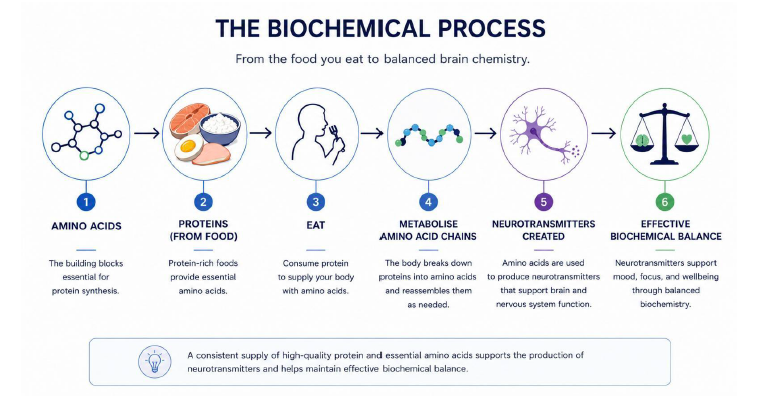
But I eat plenty of protein — why isn't that enough?
This is one of the most common questions we hear — and it's a really important one.
Protein from food does contain amino acids, but getting them from your diet into your brain as working neurotransmitters is a surprisingly complex journey. Several things can disrupt it along the way.
First, digestion has to work well. If the gut isn't breaking down protein efficiently — due to low stomach acid, poor enzyme activity, gut inflammation, or dysbiosis — the amino acids may never be properly absorbed in the first place.
Second, amino acids compete with each other for absorption and transport across the blood-brain barrier. A high-protein meal doesn't guarantee that the specific amino acids your brain needs most will actually get through — larger, more abundant amino acids can crowd out the ones in shorter supply.
Third, and perhaps most importantly, conversion doesn't happen automatically. Turning an amino acid into a neurotransmitter requires a precise sequence of biochemical steps — each one dependent on specific cofactors including Omega-3 (at the right level of EPA), B vitamins (particularly B6, B9, and B12), vitamin C, zinc, magnesium, and iron. If any of these are depleted or insufficient, the conversion process stalls — regardless of how much protein you're eating.
Stress, poor sleep, chronic inflammation, neurodiversity, medications, and genetic variations can all further reduce the body's ability to convert amino acids effectively. This is why simply eating more protein rarely resolves the problem — and why targeted amino acid support, alongside the right cofactors, can make a difference that diet alone cannot.
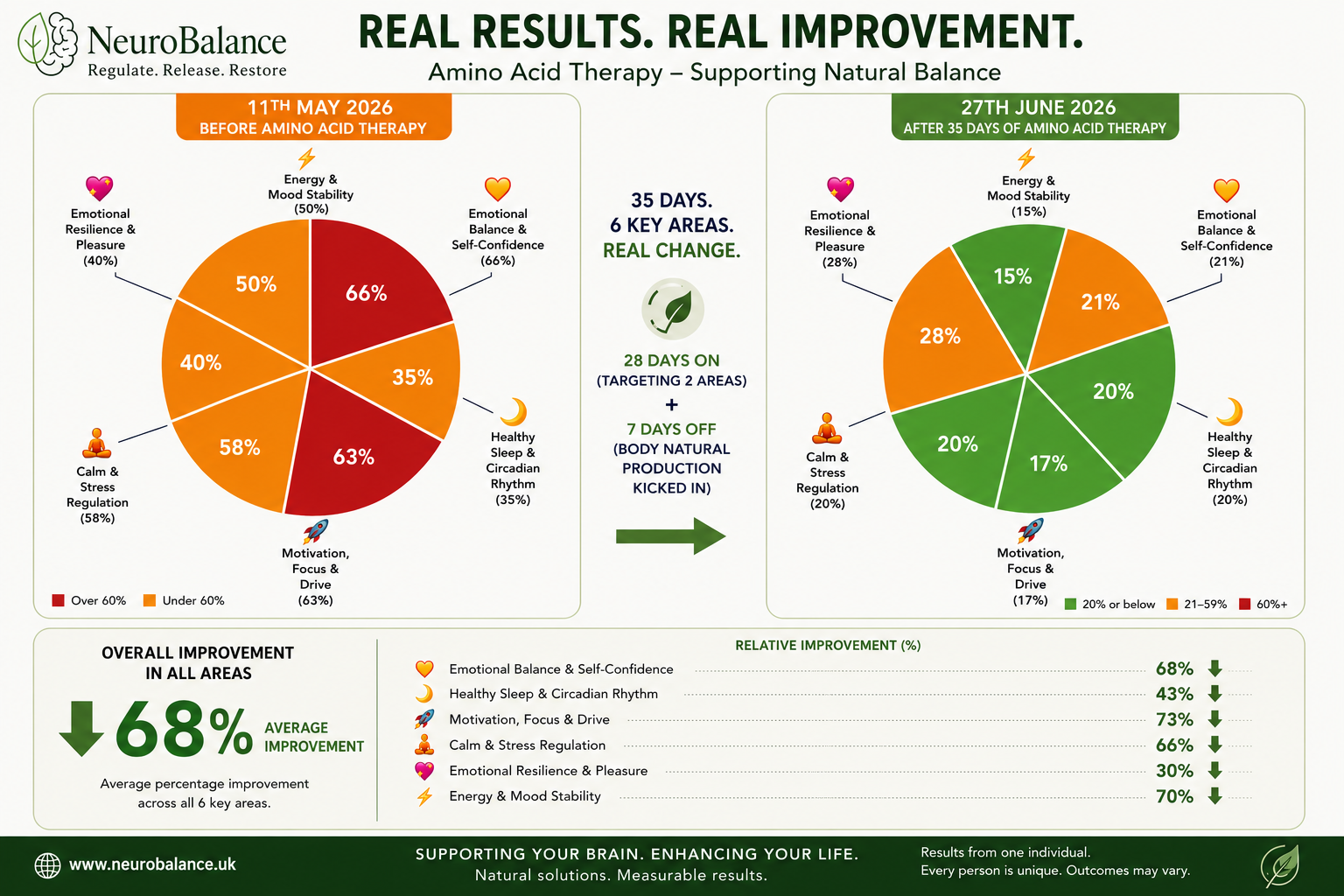
Results from one individual. Every person is unique. Outcomes may vary.
The key neurotransmitters involved include:
Serotonin
Mood, sleep, emotional resilience
Catecholamines
Focus, motivation, reward
GABA
Calm, relaxation, reducing anxiety
Endorphins
Alertness, attention, stress response
Melatonin
Sleep regulation, circadian rhythm, rest
Reactive Hypoglycaemia
Blood sugar balance, energy stability, mood regulation
The process begins with a detailed assessment to understand your unique neurochemical profile. A personalised supplement protocol plan is discussed — and recommendations of pharmaceutical-grade amino acids, vitamins, and key cofactors are discussed to ensure the correct dose and quality are purchased*— to gently restore balance from within.
This is not a one-size-fits-all approach. Every protocol is tailored to the individual, whether that's a child struggling with focus and emotional regulation, a teenager in burnout, or an adult dealing with anxiety, sleep issues, or cravings.
No prescription. No side effects. Just the brain's own chemistry, restored.
* We don't directly sell or have affiliations with any company selling Amino Acid or Co-Factor products. We will recommend some options and you are welcome to source your own — however we would ensure that we agree the dose and the quality are suitable. Cheapest or most expensive aren't always best, so we will find options that are right for you and your wallet.
85% of people benefit from Amino Acid Therapy.
The vast majority of people who take targeted amino acids to support their brain's own neurotransmitter production see meaningful, lasting change. For the 15% who need a different route — we don't stop there. We will always find a way forward with you, because we will never leave you without a next step.
At NeuroBalance, we don't guess.
We start by understanding how your brain may be functioning through our Mood Helper and Brain Function Questionnaires, helping us identify the root causes behind symptoms rather than simply masking them.
Because when you understand why the symptoms are occurring, you can make more informed decisions about the support that may help.
We also consider the wider picture, including nutrition, lifestyle, sleep, neurotransmitter patterns, potential nutrient cofactors, supplement timing, dosage optimisation, and any factors that may influence how effectively the body can utilise nutritional support.
Unlike a generic supplement approach, we introduce and trial each amino acid individually over several days. This allows us to observe how you respond, identify the most appropriate amino acid, and determine the dosage range that provides the greatest benefit for your unique needs.
Many people are surprised to discover that finding the correct dose is often just as important as selecting the correct amino acid. During our guided trial period, we help you build the confidence to make informed adjustments based on your response, ensuring that you don't abandon an amino acid simply because you haven't yet reached the level that works for you.
Once an individualised programme has been established, amino acids are typically taken for approximately 28 days, alongside the relevant nutritional cofactors and lifestyle recommendations. The aim during this period is to support the body's neurotransmitter pathways while encouraging the brain and body to optimise their own natural production processes.
Throughout the process, we focus on helping individuals better understand the relationship between their symptoms, brain function, nutrition, and overall wellbeing, creating a more personalised and informed approach to support.
Rather than relying on trial and error, our goal is to provide a structured, evidence-informed approach that helps identify what your brain may need and how best to support it.
The aim isn't to chase symptoms.
The aim is to understand what your brain may be asking for.
Thinking about trying Amino Acid Therapy on your own? Read our guide on why expert guidance matters — 10 things to consider before going it alone.
Discover which areas you would benefit from supporting:
Take our free 5-minute questionnaire and receive a FREE personalised, comprehensive report!
Neurofeedback Therapy
What is Neurofeedback Therapy?
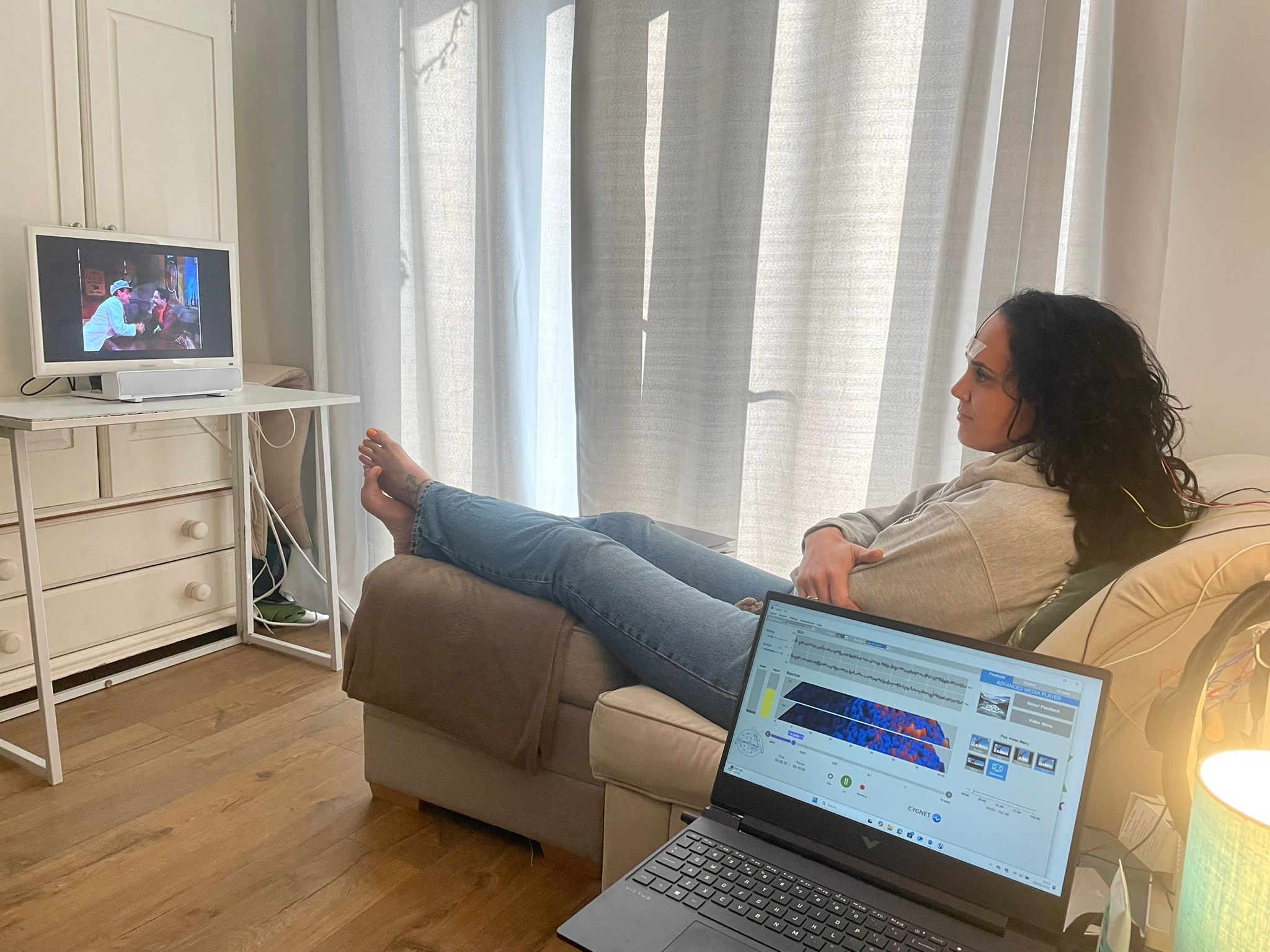
Neurofeedback is a non-invasive, medication-free brain training technique that helps the brain learn to regulate itself more effectively. Using real-time monitoring of brainwave activity, it provides the brain with instant feedback — allowing it to identify and correct dysregulated patterns.
Sensors placed on the scalp measure electrical activity in the brain. Think of it as holding a mirror up to the brain — nothing is done to you, it's your brain learning from itself. This information is fed back through visual, auditory and kinetic signals — typically a film or game that responds to the brain's activity. When the brain produces healthy, regulated patterns, the feedback is positive. When it drifts, the feedback pauses — gently prompting the brain to self-correct.
Every Neurofeedback programme is unique and deeply personalised. Each session builds on the last, progressively targeting the specific areas you want to work on — whether that's focus, sleep, anxiety, emotional regulation, or trauma. No two programmes look the same, because no two brains are the same.
Over a series of sessions, the brain learns to hold these healthier patterns independently — developing the ability to self-regulate and become more resilient. The changes are lasting because the brain itself has been retrained through repetition and neuroplasticity, not suppressed or overridden.
No medication. No talking. Just the brain, learning to regulate itself.
What is QEEG Brain Mapping?
While MRI and CAT scans reveal brain structure, they tell us little about brain function. QEEG Brain Mapping (AQBM) is based on the brain's electrical activity — giving us a detailed picture of how your brain is actually working, not just what it looks like.
It can identify how well different brain networks are integrated, pinpoint the neurophysiological causes of mental health and neurological conditions, and reveal the source of issues — not just the symptoms — at a level of detail that blood tests, psychological assessments, and traditional neurological investigations simply cannot match.
QEEG takes EEG readings at 19 positions on the scalp under multiple conditions (eyes open, eyes closed). Recordings are then cleaned of movement artefacts and submitted for software analysis. We offer four versions — Basic, Standard, Advanced and Bespoke — all including a full report.
Note: Only Bespoke QEEG Brain Mapping is suitable for young children.
Why they work together
Amino Acid Therapy restores the brain's chemical foundation — giving it the raw materials it needs. Neurofeedback then trains the brain to use those resources effectively, building new, regulated patterns that last. Together, they address both the chemistry and the wiring — a complete, natural reset.
Real Stories
What our clients say
Life Saving
"I worked with Zoe for 20 sessions. She was absolutely fantastic and supported me through one of the hardest times in my life following autistic/adhd burnout. I personally found it hard to gauge any progress throughout with self-completed measures but 1-2 months after treatment and returning to my family I really started to notice that my sensory issues decreased, patience was improving and I no longer felt in constant crisis. Hoping the improved neuroplasticity will only continue to support me as I have to increase daily stressors moving forward. Would definitely use again if I start to struggle. Bare with it, it's well-researched and might just be the thing you need when nothing else has helped."
Dan S.
NeuroBalance Client
Understanding ADHD
What are the 7 Types of ADHD?
ADHD is not one-size-fits-all. Research by Dr Daniel Amen identifies seven distinct types — each with different brain patterns, symptoms, and optimal approaches to treatment.
Which type do you have traits for?
Complete our FREE 5 min questionnaire →Receive a comprehensive personalised report — completely free
Classic ADHD
The most recognised type. Characterised by inattention, hyperactivity, and impulsivity. Often diagnosed in childhood, particularly in boys.
Inattentive ADHD
Predominantly inattentive with little or no hyperactivity. Often missed or misdiagnosed — particularly common in girls and adults.
Over-focused ADHD
Difficulty shifting attention, excessive worrying, and getting stuck in loops of negative thinking. Often accompanied by anxiety and OCD tendencies.
Temporal Lobe ADHD
Involves memory and mood issues alongside classic ADHD symptoms. Can present with irritability, aggression, and dark or violent thoughts.
Limbic ADHD
ADHD combined with chronic low-grade depression. Characterised by moodiness, low energy, negativity, and a tendency to isolate.
Ring of Fire ADHD
Intense, cyclic mood changes, hypersensitivity, and extreme distractibility. The brain appears overactive across multiple regions simultaneously.
Anxious ADHD
ADHD accompanied by significant anxiety, tension, and physical stress symptoms. Tends to freeze under pressure rather than act impulsively.
Neurofeedback and Amino Acid Therapy can be tailored to each ADHD type — addressing the specific brain patterns and neurotransmitter imbalances involved, rather than applying a blanket approach.
Ready to find out if this is right for you?
Book a free 20-minute call and we'll talk through your situation and which approach fits best.
Book My Free Call